Ask people why they avoid the front row at a comedy show and most will say the same thing: they do not want to be picked on. It is a fair worry. It is also, in most rooms, a misunderstanding of what is going on.
What crowd work is
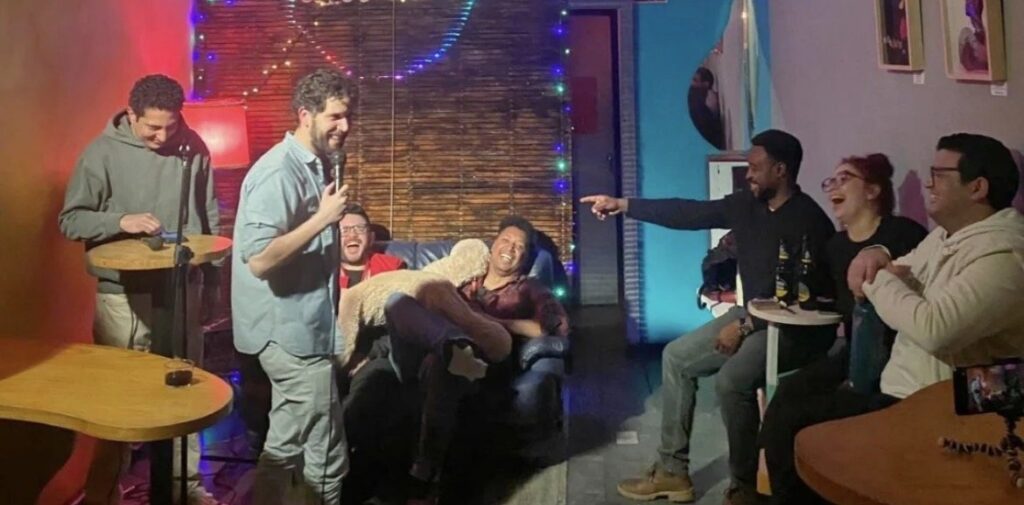
Crowd work is when a comedian talks directly to people in the audience and builds jokes out of the answers. It can be a quick question (“Where are you from?”) or a long, improvised conversation that becomes the best part of the night.
It is different from a prepared routine. The comedian does not know what you will say, so neither do they know where the joke is going. That risk is exactly why audiences love it. Nobody else will ever see that exact moment again.
Why comedians do it
- To read the room. A few questions tell a comedian who is in tonight: locals, visitors, students, a birthday group.
- To make the night unique. A show built partly on the audience cannot be repeated.
- To bring people in. In a small venue, talking to the crowd makes everyone feel part of it.
Good crowd work is not about humiliating anyone. The best comedians make the person they talk to look good, or at least make the joke about the situation rather than about them.
What happens if you are picked
Usually the comedian asks something simple: your name, what you do, where you are from, why you are here tonight. You answer honestly and briefly. That is it. The comedian does the work of finding the funny side.
Some practical tips:
- Short answers are better than long ones. You are giving the comedian material, not doing a set.
- Do not try to out-joke them. It rarely goes well and it can stop the show’s rhythm.
- It is fine to laugh at yourself. The room is on your side far more often than you think.
- If you genuinely do not want to take part, a polite smile and a short answer usually moves things on quickly.
The difference between crowd work and heckling
Crowd work is the comedian inviting you in. Heckling is an audience member interrupting uninvited. The first makes a show better. The second usually makes it worse, even when the heckler thinks they are helping.
If something on stage makes you want to shout out, wait. If the comedian asks the room a question, that is your moment. Our glossary of comedy terms explains heckling, callbacks and the rest of the vocabulary.
So, should you sit at the front?
If you want the full energy of a live show, yes. The front row hears every aside, sees every face the comedian pulls and gets the best view of the stage. You might be spoken to. You will almost certainly enjoy it more than you expect.
If you would rather watch, sit further back or near the side. You will still have a great night.
Crowd work at No Offense, But...
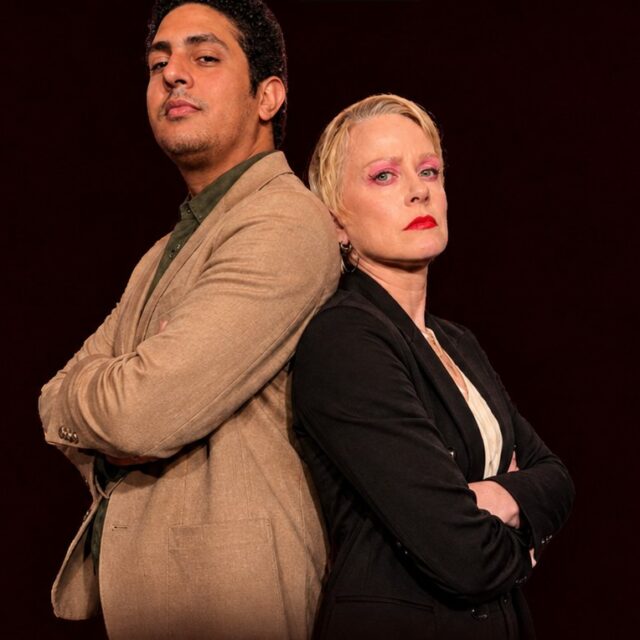
Our show No Offense, But... leans into this. It mixes stand-up with live podcast moments, improv and a lot of audience interaction, hosted by Mehdi Mahtaj. At Off Latina the front row is right by the stage, so choose your seat wisely. The show is in English, and if you have never been to a comedy show before, our guide to your first comedy night explains the rest.
Ready to test the front row? See the next date and get tickets.