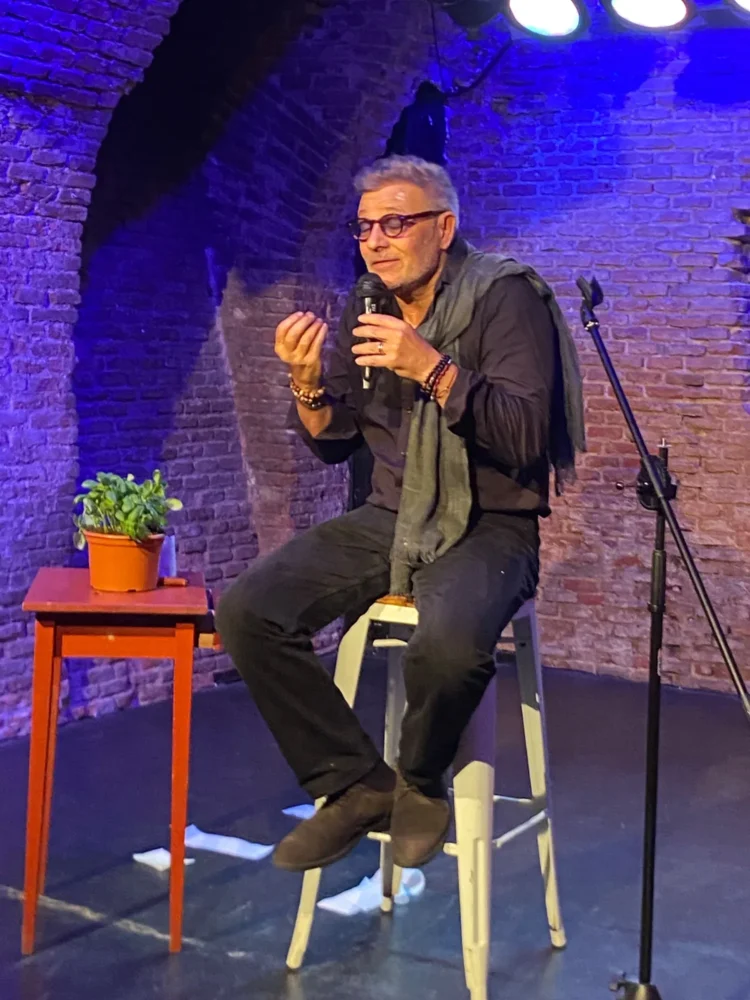
A comedy night in English in Madrid rarely has two comedians from the same place. In one evening you might hear an American, an Irish storyteller, a Londoner, someone from Lagos and a Spaniard who learned stand-up in English. They share a language. They do not always share a sense of humour.
That mix is one of the best things about the scene here. It also explains why some jokes land differently depending on who is in the room.
A warning about generalisations
Every comedian breaks the rules described below. There are deadpan Americans and loud, confessional Brits. Treat these as broad tendencies that people in comedy often talk about, not as boxes.
British humour: irony and understatement
British comedy is often associated with saying less than you mean. Irony, sarcasm and understatement do a lot of the work. A disaster becomes “not ideal”. A triumph becomes “fine, I suppose”. Self-deprecation is common, and so is a love of awkwardness: the joke is often the gap between how a situation should go and how it actually goes.
For international audiences, the challenge is that irony depends on tone. If you miss the tone, you miss the joke.
American humour: directness and confession
American stand-up has a strong tradition of telling it straight. Comedians build big, clear premises, push them hard and often talk openly about their own lives, families and failures. The structure tends to be tight: set-up, punchline, tag, next.
That clarity travels well. It is one reason so much American stand-up works for audiences who speak English as a second language.
Irish humour: the story is the joke
Irish comedy is often linked to storytelling. A comedian might take five minutes to get to the punchline, and the detours are the point. The warmth of the telling matters as much as the gag at the end.
Everyone else
Madrid’s English-language comedy scene is truly international. Many performers are from places where English is one of several languages they use, and their comedy often lives in that space: misunderstandings, translations, cultural collisions. Some of the sharpest material in the city comes from people comparing how things work at home with how they work in Spain.
What happens when styles meet
On a mixed bill, the variety keeps the night moving. A quick-fire American set followed by a slow Irish story and a deadpan British closer feels like three different shows. For the audience, it is a chance to discover which style makes you laugh hardest.
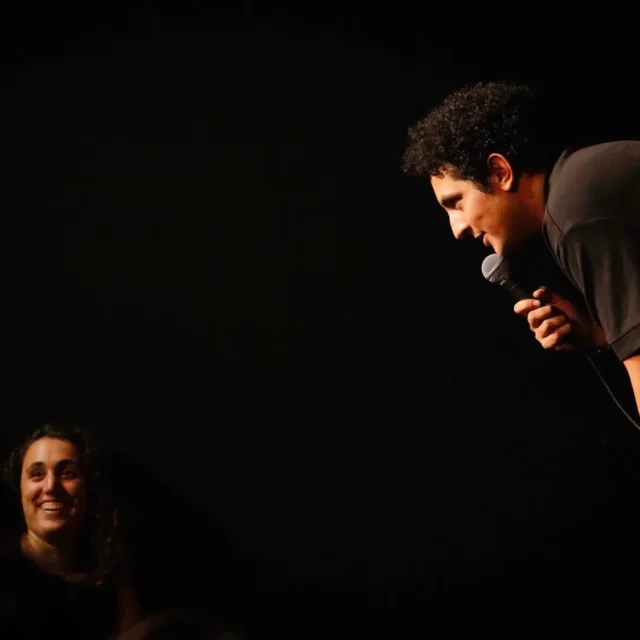
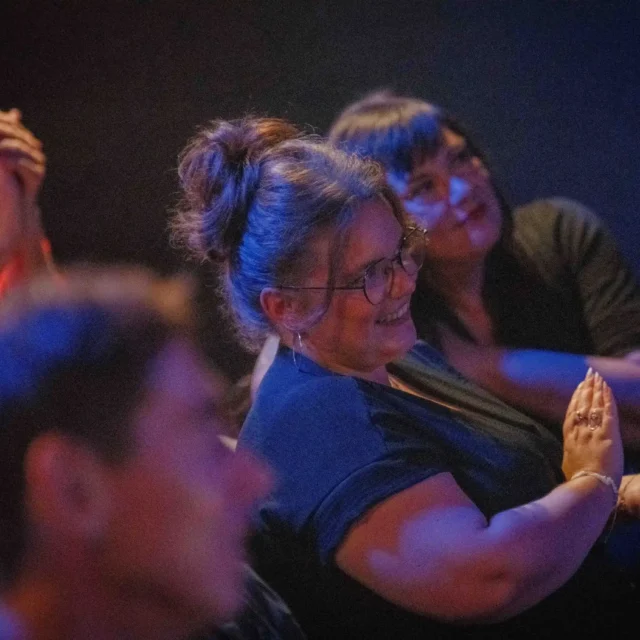
It also creates friction, in the good sense. Comedians riff on each other’s cultures, and audiences from different places react at different moments. You hear the room laugh in waves.
Two backgrounds, one stage
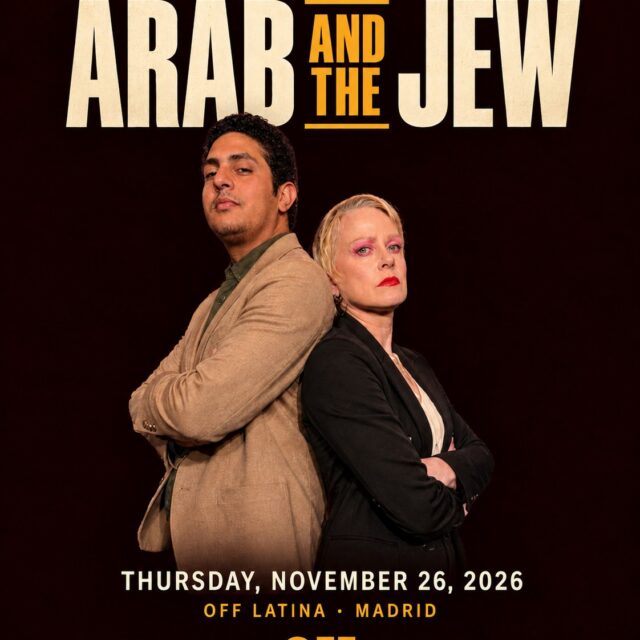
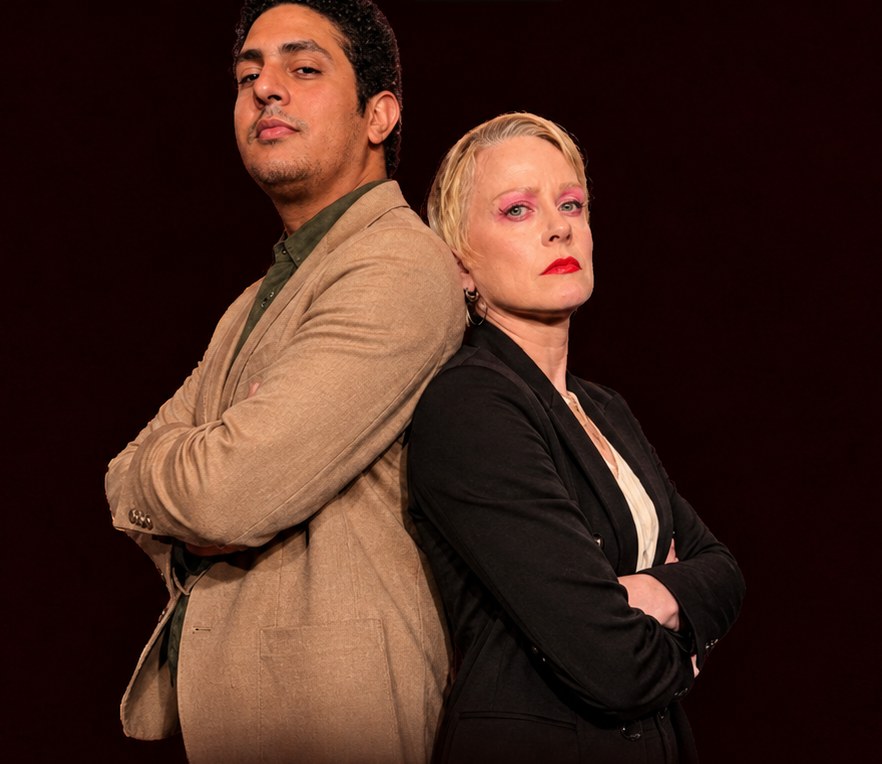
Our show The Arab and the Jew is built on exactly this kind of meeting. Mehdi Mahtaj is a Moroccan comedian based in Madrid. Rachel Arieff was born in Milwaukee, started stand-up in Austin in the 1990s and has worked in Spain since 2004, performing in Spanish, English and Catalan. Together they mix stand-up, sketches, music and personal stories with an honest conversation about politics, identity and Palestine. It is in English. We explain more about the show’s approach in can comedy talk about Palestine?
If you prefer a mix of comics and formats with no fixed theme, No Offense, But... brings together comedians from Madrid’s scene for stand-up, live podcast moments and improv.
How to enjoy a style you are not used to
- Give each comedian a minute or two. Some styles take longer to warm up.
- Watch the face as much as you listen. Deadpan humour lives in expressions.
- Do not worry about missing a reference. The next joke is coming.
If English is not your first language, our guide to comedy in English for Spanish speakers has more tips. And to hear the styles for yourself, check the next English comedy nights in Madrid.