Most people who move to Madrid pick a flat for the price, the light or the commute. A few months later they realise the barrio has quietly decided their social life. If the nearest metro stop is twenty minutes from anywhere you want to be at night, you go out less. If you can walk home from a show, you go out more.
This guide looks at the central neighbourhoods from that angle: what an evening there is like, who tends to live there, and how easy it is to reach the places where English-language culture happens.
La Latina: tapas streets and a theatre on the corner
La Latina is old Madrid. Narrow streets, churches, plazas that fill up on weekend afternoons and a bar culture built around standing at the counter. Calle de la Cava Baja is the famous tapas street, and on Sundays the Rastro flea market spills down the hill along Ribera de Curtidores.
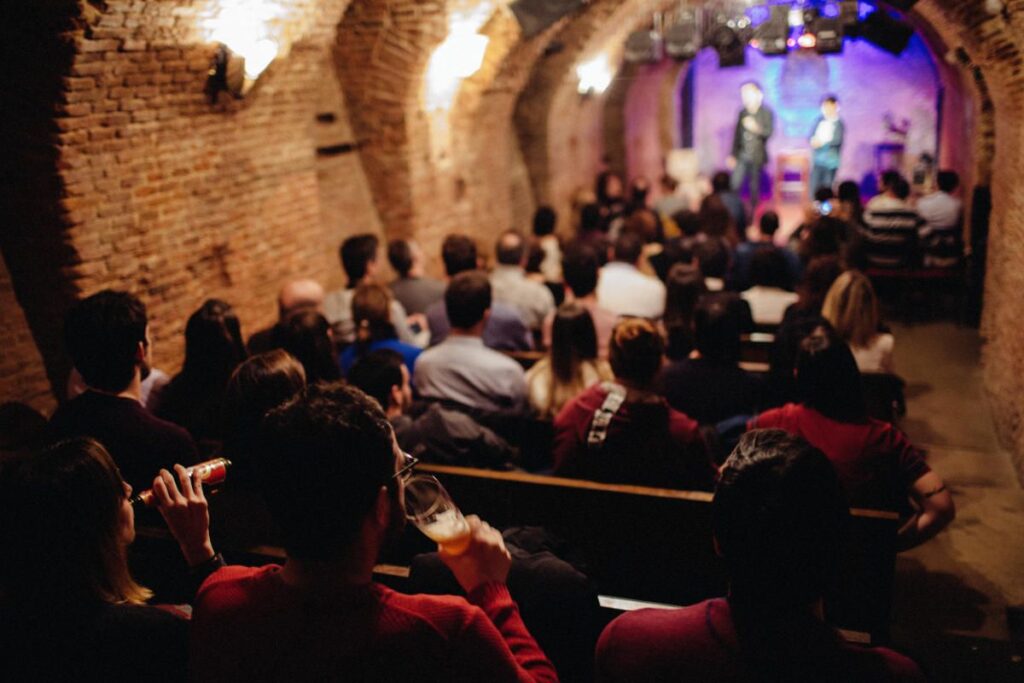
For a night out it is hard to beat. It is also where we put on our shows: No Offense, But... and The Arab and the Jew both play at Off Latina on Calle de los Mancebos, a few minutes from La Latina metro (line 5). The trade-off is noise. Flats above bar streets can be loud until late, so look at which way the bedroom faces before you sign anything.
Lavapiés: the most international barrio in the centre
Lavapiés sits just east of La Latina and has a very different feel. It is hilly, diverse and full of small restaurants run by people from all over the world. Calle Argumosa has a row of terraces, and the area has a strong cultural side, with the Teatro Valle-Inclán and La Tabacalera nearby.
A lot of newcomers end up here because it feels open and unpretentious. If you want to hear five languages on the walk to the metro, this is your place. We wrote a separate evening guide to Lavapiés if you want more detail.
Malasaña and Chueca: nightlife on every corner
North of Gran Vía, Malasaña is the barrio of vintage shops, independent bars and late nights around Plaza del Dos de Mayo. Next door, Chueca is the centre of LGBTQ+ Madrid and one of the liveliest parts of the city after dark.
Both are brilliant if you want to go out often and do not mind sharing your street with people who are doing the same. Rents tend to reflect that popularity, and weekend nights are loud.
Huertas and the Barrio de las Letras
Between Sol and the Paseo del Prado, the literary quarter mixes tourist bars around Plaza de Santa Ana with quieter streets full of history. Cervantes and Lope de Vega both lived here, and you will see lines of their writing set into the pavement.
It is very central, walkable to the big museums and a short stroll from La Latina. Good for people who want everything close and are happy with a mix of visitors and locals around them.
Chamberí: calmer, still close
If you want to go out but also want to sleep, Chamberí is a common answer. It is residential and leafy, with a strong local bar scene on streets like Calle de Ponzano. Many people who work in offices around the Castellana live here.
Getting to La Latina or Lavapiés takes a short metro ride rather than a walk, which is a fair price for quieter nights.
A quick comparison
| Barrio | Evening feel | Good for | Watch out for |
|---|---|---|---|
| La Latina | Tapas, plazas, theatres | Walking to shows and dinners | Street noise at weekends |
| Lavapiés | International, relaxed | Food from everywhere, culture | Steep streets, older buildings |
| Malasaña | Bars and late nights | Going out often | Noise, higher rents |
| Chueca | Lively, LGBTQ+ centre | Social life on the doorstep | Busy weekends |
| Huertas | Historic, central | Museums and nights out | Tourist crowds near Santa Ana |
| Chamberí | Local and calmer | Balance of sleep and going out | Metro ride to the old centre |
How to choose
Before you commit, spend an evening in the barrio you are considering. Walk from the flat to the nearest metro after dark. Have dinner there on a weekday, not just a Saturday. Check how long it takes to get to the places you actually go: your office, your friends, and wherever you like to spend a night out.
Also check the night transport. The metro stops taking passengers around 1:30, so it helps to know your night bus or how long the walk home really is. Our guide to getting home after a late show covers the options.
Finding your people once you arrive
Whichever barrio you choose, the first months are easier if you have somewhere to go regularly. A recurring night out, a class, a sports club or a language exchange gives you faces you recognise. Live comedy in English works well for this because the rooms are small and people come back. If you are new in town, our piece on meeting people in Madrid has more ideas, and the what’s on page lists our next English comedy nights.
For official neighbourhood information, the city’s tourism site esMadrid is a useful starting point.